The Hidden Costs of Outdated Dental Offices
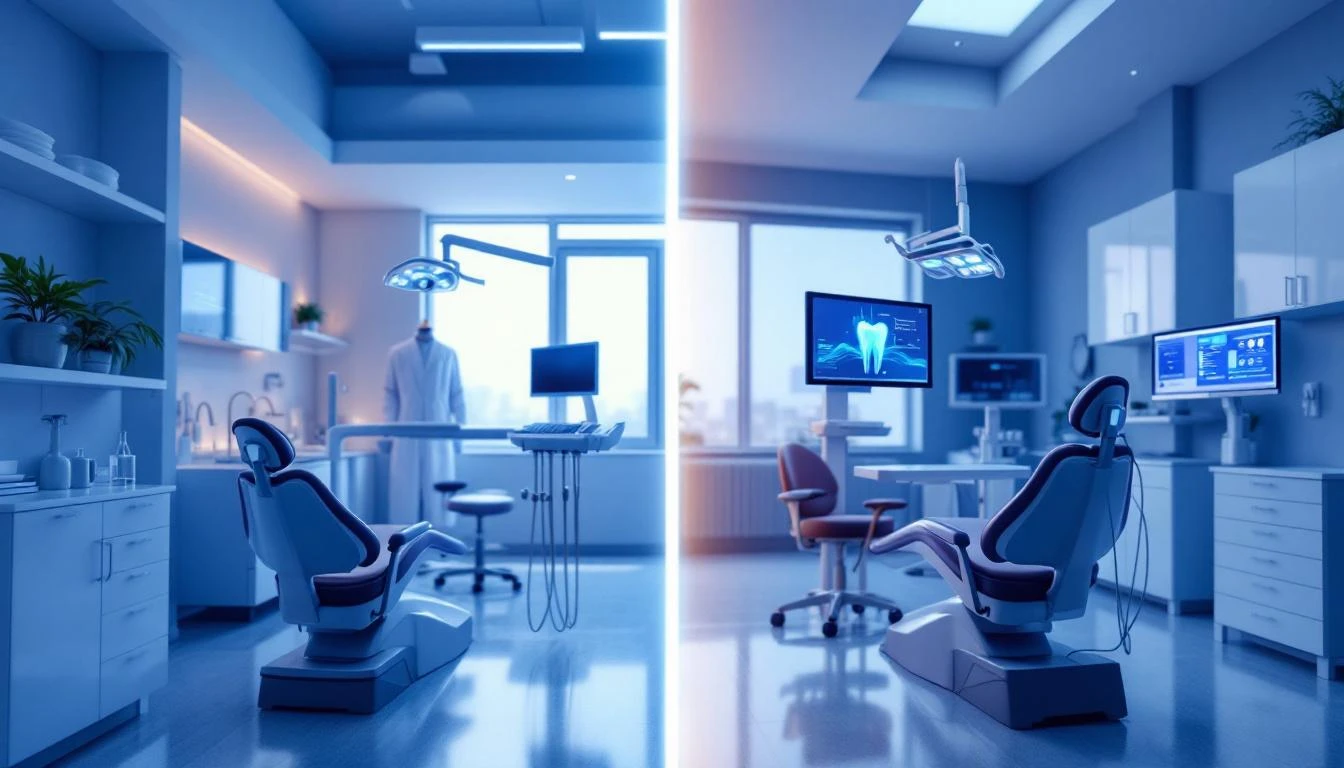
That dental office with the older decor and film X-rays on the wall might seem charming, but outdated equipment can cost you more than you realize — in time, comfort, and money.
More visits for the same result
Without CEREC technology, a crown requires two visits: one for impressions and a temporary, another for placement. Without digital imaging, some diagnostics require referrals to other offices. Each additional visit means more time off work, more co-pays, and more hassle.
Less accurate diagnostics
Digital X-rays capture more detail than film, detect issues earlier, and expose you to significantly less radiation. 3D imaging (CBCT) can reveal problems that 2D images miss entirely, like hidden infections or impacted teeth. Practices without these tools may miss early-stage issues that become expensive later.
Scheduling friction
Practices without online booking systems tend to have phone-only scheduling, which means limited hours to book, longer hold times, and more no-shows that push your appointment further out. Digital engagement tools make the entire scheduling experience smoother.
Higher long-term costs
Early detection saves money. A cavity caught with advanced imaging might cost $200 to fill. The same cavity missed and left to progress could become a root canal ($1,000+) or an extraction with an implant ($3,000+). Modern diagnostic tools pay for themselves by catching problems early.
How to check before you book
On DentalVitals, every practice profile shows its technology stack and Vitals Score. Look for digital X-rays, intraoral cameras, and online booking as minimum modern standards. A Vitals Score above 60 generally indicates a practice that has invested in keeping up.
The cheapest dental office isn't always the most affordable in the long run. The technology and infrastructure behind the practice matter as much as the price on the sign.